Qualitative causal modelling & Insight Matrix
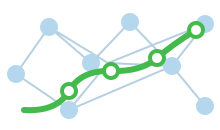
Weighted causal relationships reveal short-, medium- and long-term levers and obstacles. Related to Fuzzy Cognitive Maps (FCM), with the distinctive Insight Matrix analysis.

FOUNDATIONS, PRACTICE, PUBLICATIONS
Methods, applications, projects and publications – from KNOW-WHY to scientific work and practical examples.
Systems thinking, modelling, simulation and optimisation in one tool.
 Capture effects
 Explore dynamics
 Derive insights
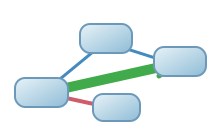
Weighted causal relationships reveal short-, medium- and long-term levers and obstacles. Related to Fuzzy Cognitive Maps (FCM), with the distinctive Insight Matrix analysis.
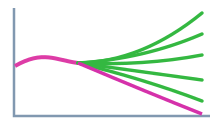
Quantitative models simulate feedback, scenarios and change over time, using flexible formulas for relationships.
Systematically seek overlooked influences and support creative, synthetic thinking in workshops and World Café formats.
Explore dynamic bottlenecks, resources and processes, including approaches from the Theory of Constraints (ToC).
Explore uncertainty, fit model parameters to data and identify favourable solutions under objectives and constraints.
Bring stakeholder perspectives together, navigate interconnected arguments and explore large models through bionic navigation.
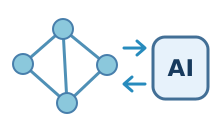
AI tools can generate and review models or suggest further influences. The open .imm file format enables exchange with compatible tools, while people critically examine and extend the reasoning.
From business strategy to the global energy transition.
iMODELER is used wherever many interconnected factors must be considered. For more than two decades, Consideo has worked with nearly 100 customers across sectors, including automotive, banking, public transport and consulting.
From systemic strategy development and corporate foresight through transformation and change management to process optimisation.
Explore the interactions of environment, resources, business, behaviour and social transformation.
Work with different stakeholders to develop regions and communities.
Qualitative and quantitative models for complex research and scenario exploration.
Sharing knowledge, understanding connections and thinking further.
Many example models are available on KNOW-WHY.NET. Our archive includes papers, studies and research reports. Original files and images are being added progressively.
If no English version is available, the original publication appears in German (DE).
Analytical AI and exploratory, synthetic systems thinking – how they complement each other.
View publicationSix functions for combining AI with exploratory causal modelling in iMODELER.
View publicationExploratory stakeholder modelling for the Bio-Mo-D project.
View publicationGlobal land use, food security, forests and biotic resources.
View publicationDistinctive approaches to qualitative and quantitative modelling with iMODELER.
View publicationA system dynamics study of resource demand and pathways towards globally renewable energy systems.
View publicationConstraints and systemic bottlenecks in the global renewable energy transition.
View publicationUmweltbundesamt, Texte 26/2021: Zielbilder und Narrative für gesellschaftlichen Wandel.
View publicationUmweltbundesamt, Texte 189/2020: Möglichkeiten zur Erweiterung ökonomischer Modelle.
View publicationA systemic perspective on food security and sustainable agricultural development in African countries.
View publicationQualitative and quantitative models of the pandemic and its social implications.
View publicationSocietal transformation, behaviour change and the dynamics of well-being.
View publicationSystemic environmental implications of digitalisation, automation and artificial intelligence.
View publicationSimulations of global battery-electric mobility and lithium availability.
View publicationFlächennutzung, Ernährung, Biodiversität und Klimawirkungen in Deutschland.
View publicationDynamics of the renewable energy transition and potential resource bottlenecks.
View publicationDeveloping a culture of collaborative systemic reflection in organisations.
View publicationUmweltbundesamt, Texte 95/2018: Aufbau des gesellschaftlichen Simulationsmodells D3.
View publicationUmweltbundesamt, Texte 96/2018: Wirkungen gesellschaftlicher Transformationsszenarien.
View publicationUmweltbundesamt, Texte 97/2018: Erneuerbare Energien, Ressourcen und Volkswirtschaft.
View publicationUmweltbundesamt, Texte 98/2018: Partizipatives Planspiel zur gesellschaftlichen Transformation.
View publicationResearch article on trade-offs and synergies among the Sustainable Development Goals.
View publicationProjektMagazin: Innovative Lösungen und Projektrisiken systematisch bearbeiten.
View publicationUBA-Veröffentlichung zu ressourcenschonenden Transformationspfaden.
View publicationFachbeitrag über verbreitete Missverständnisse des vernetzten Denkens.
View publicationSystemic strategy and risk analysis, including SWOT, illustrated with a business example.
View publicationQuantitative optimisation and risk analysis in projects and processes.
View publicationProjektMagazin: Qualitative Ursache-Wirkungsmodellierung in komplexen Projekten.
View publicationUBA-Text 74/2014: Systemische Zusammenhänge einer nachhaltigen Gesellschaft.
View publicationUBA-Text 75/2014: Dokumentation des qualitativen Nachhaltigkeitsmodells.
View publicationSwedish Environmental Protection Agency report on impacts of global megatrends at regional scale.
View publicationE:CO, Vol. 16, No. 2, pp. 29–43: qualitative modelling, weighting and Insight Matrices.
View publicationE:CO, Vol. 15, No. 3, pp. 81–93: the evolutionary foundations of KNOW-WHY Thinking and their applications.
View publicationAusführliche Anleitung zum Beergame als Planspiel für Lieferketten und Bestandsdynamik.
View publicationPractical introduction to qualitative cause-and-effect modelling, the KNOW-WHY Method and the Insight Matrix.
View publicationWie Ursache-Wirkungsmodelle und vernetztes Denken von Kindergarten bis Sekundarstufe vermittelt werden können.
View publicationDas Zusammenspiel von Produkt-, Preis-, Kommunikations- und Distributionspolitik systemisch analysieren.
View publicationPraxisorientiertes E-Buch zur Modellierung von QM-, Lean- und Six-Sigma-Methoden mithilfe von KNOW-WHY.
View publicationIntellektuelles Kapital und weiche Erfolgsfaktoren einer Organisation erfassen und analysieren.
View publicationEinordnung qualitativer Modellierung von Fuzzy Cognitive Maps bis zur Ursache-Wirkungsanalyse.
View publicationKrisen-, Change- und Verbesserungsmanagement mit qualitativen Modellen und der KNOW-WHY-Methode.
View publicationErgänzung der klassischen SWOT-Analyse durch systemische Ursache-Wirkungszusammenhänge.
View publicationSystemische Strategieentwicklung mit Ursache-Wirkungsmodellen, KNOW-WHY und Bezug zur Balanced Scorecard.
View publicationManaging complex projects through cause-and-effect models, KNOW-WHY Thinking and simulation.
View publicationProjektbeschreibung zur qualitativen und quantitativen Analyse von Fehlzeiten und Personalentwicklung am Flughafen München.
View publicationFurther paper on the Munich Airport human-resources modelling project.
View publicationNo publications match your search.